
A year of events and engagement
ADR UK works with researchers, policymakers, data professionals, public sector partners and wider communities across the UK and beyond to unlock the potential of administrative data for public good.
This year, we have strengthened these connections through conferences, policy engagement, training, knowledge exchange and growing communities and networks. From showcasing our data to new research audiences to bringing evidence into policy discussions and building researcher capability, these activities are helping to broaden the use of administrative data and increase its potential to improve lives.
Promoting administrative data across the UK and beyond
This year, ADR UK showcased the potential of administrative data for research at a number of high-profile academic conferences. Following the success of the ADR UK Conference in 2025 in Cardiff, these events presented the opportunity to connect with new academic communities and encourage the use of our data for public good research across a range of fields. Key exhibitions included:
- The Health Data Research UK (HDR UK) Conference in Glasgow, where we shared the possibilities of administrative data with the health data community.
- The UK Evaluation Society Conference in Sheffield, where we discussed how administrative data can generate real impact by evaluating how far public policy and practice interventions work to improve lives.
- Digital Footprints in York, where we explored the shared possibilities of smart data and administrative data.
- The Royal Economic Society Conference in Newcastle, where we showcased the ADR UK flagship datasets available for public good research.
- The International Population Data Linkage Network (IPDLN) Conference in Rotterdam, where we connected with the global research community using linked data.
Across the year, these events have helped ensure ADR UK’s data offer is expanded as widely as possible across the academic community, supporting a more diverse community of researchers to use this data and make an impact.
This year saw the Office for National Statistics (ONS) host Research Capability 2025, which brought the research community together to share expertise, explore emerging opportunities and celebrate impactful research. The event introduced new Data Spotlight Talks and was supported by the Acting National Statistician. Building on this success, planning began for the new ONS Secure Research Service (SRS) Conference, a dedicated annual event focused on the UK's largest trusted research environment. The conference includes the presentation of the ONS Research Excellence Awards, with winning researchers going on to present their work through the Research Excellence Series. This series attracted more than 2,000 registrations this year and highlighted research that informs policy and improves lives.
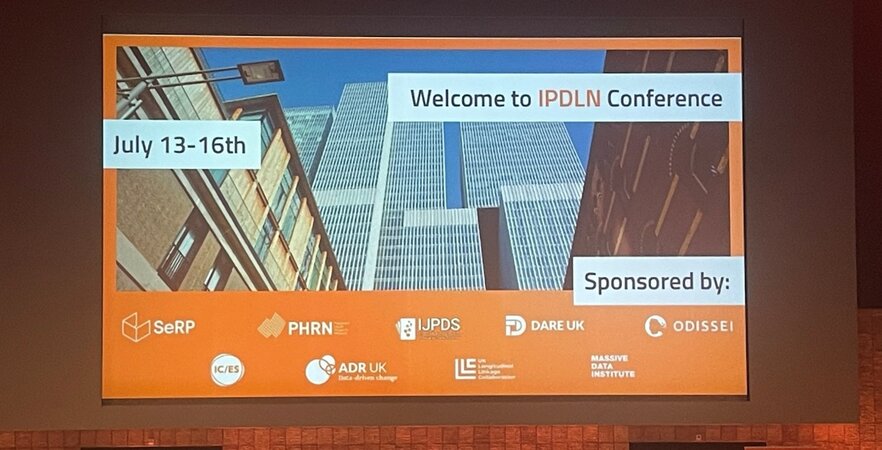
ADR Wales has continued to play a significant role in research, innovation and knowledge exchange, demonstrating a strong presence at key national and international forums. This included substantial involvement in IPDLN Rotterdam and the inclusion of our work within Royal Statistical Society activities. The team has delivered dissemination activities across multiple thematic areas, facilitating engagement with practitioners, researchers and policy stakeholders.
ADR Wales has also advanced technology-focused engagement through national and international presentations and collaborations, showcasing the security, privacy and robustness of the SAIL Databank and SeRP platform, and reinforcing their reputation as leaders in the space.
Connecting research with policy and government
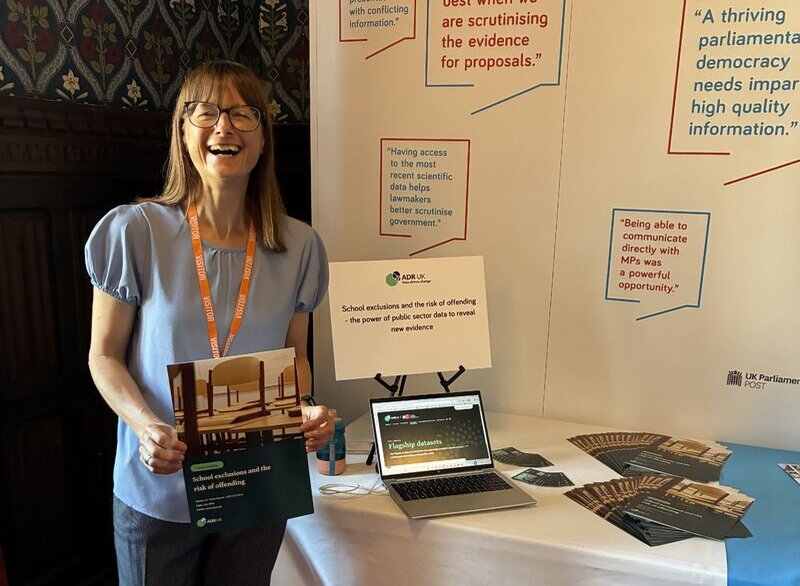
During Evidence Week in UK Parliament, ADR UK Fellow Dr Vickie Barrett shared a policy briefing from research using the ADR England linked MoJ-DfE dataset. Her research shows new insights into the relationship between school exclusions and later criminal justice involvement, providing key evidence for the policymakers in attendance.
In March 2026, ADR NI launched a new, themed 'Research Informing Policy' webinar series, showcasing how evidence and insight can inform policy to senior officials across the NI Civil Service. The first theme was 'Mental ill-health, suicide and substance-related deaths'. Policy engagement also grew through the ADR NI university teams’ role as secretariat to the All-Party Group (APG) on Policy and Public Data. Meetings this year included presentations and discussion on the Anti-Poverty Strategy, homelessness, data sharing and linkage in the Northern Ireland Executive, and contributions from front-line services and the voluntary, community and social enterprise sector.
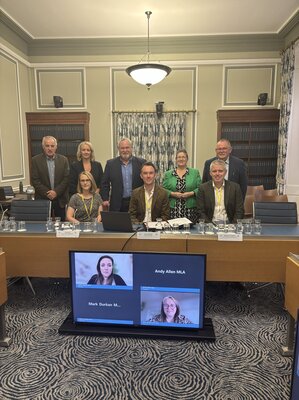
ADR NI researchers also shared evidence across policy and research forums, including the NI Assembly Knowledge Exchange Seminar Series on Good Jobs, the ADR UK/HDR UK Area Deprivation Showcase, and evidence engagement with the Committee for Communities. Together, these activities strengthened dialogue between research, policy and lived experience, supporting more transparent and evidence-informed use of administrative data. They also raised the profile of ADR NI research across government and the Northern Ireland Assembly, increasing demand for linked-data evidence to inform complex policy challenges. This growing engagement has contributed to wider discussions on data sharing and linkage in Northern Ireland, including the legislative changes needed to support the safe and effective use of linked administrative data for public benefit.
ADR Scotland has also delivered a comprehensive workshop and events programme connecting researchers with policy and government. This includes workshops such as ‘Evaluating the Wider Impacts of Scottish Child Payment’ which brought together researchers, policy, local government, third sector and parents with lived experience, and the ADR Scotland Seminar Series.
ADR Wales is set up to ensure that research using data informs policy and public services. Over the past year, a number of ADR Wales research themes have provided evidence to the Senedd (Welsh Parliament). The ADR Wales team within Welsh Government continues to play a key role, liaising with policymakers and championing the programme's work across government.
ADR Wales' Head of Data Acquisition and Linking for Research, Faye Gracey, has also been appointed to the UK Government's Evaluation and Trial Advice Panel, reflecting both individual expertise and the wider contribution of the ADR Wales team to research governance and evaluation.
Building communities and stakeholder networks
This year has seen ADR UK significantly grow our cohort of ADR UK Ambassadors across the UK. Ambassadors are people working as data-driven change-makers across government, academia and beyond, who use their networks to advocate for administrative data research to change lives. This year we welcomed 14 new Ambassadors to join the existing community, and look forward to working with them to increase impact through administrative data research in the years ahead. The range of engagement activity for the Ambassadors is continuing to grow, both within each UK nation and at a cross UK-level.
ADR England has continued to invest in building communities around priority research areas. Through the Research Community Catalysts, researchers, analysts, policymakers and practitioners have come together to share learning. These communities also support the development of research priorities and work to explore how administrative data can support better understanding of complex issues like youth transitions, children at risk of poor outcomes and evaluation of public services. Activities have included researcher clinics, seminar series, knowledge-sharing events and discussions around responsible and meaningful uses of administrative data.
Several new ADR UK communities of practice across England also launched, including the Administrative Data for Social Policy community at Manchester Metropolitan University, Admin Data Crime and Justice Researchers Hub at Huddersfield University, and the UK Data Linkage Community (in partnership with DARE UK). Many other communities of practice will be launching before the end of 2026. Earlier this year, ADR UK launched a new newsletter to promote the activities of communities of practice based in England and beyond.
ADR NI delivered a wide-ranging programme of events and engagement this year, bringing together researchers, policymakers, data owners, public contributors and voluntary sector partners to explore how linked administrative data can inform policy and practice in Northern Ireland.
Throughout the year, ADR Wales has maintained active engagement across several priority themes, including social justice, early years, Ymateb, and housing and homelessness. This work has brought together a diverse range of stakeholders from academic, policy, public sector and third-sector backgrounds, resulting in an exciting year for collaboration. ADR Wales is now exploring further ways to incorporate the vital learnings from advisory groups into its projects, such as the Ymateb Women's Health project, and the Early Years team continues to build its work on a strong foundation of coproduction and stakeholder engagement. ADR Wales has also continued to support and participate in inspiring engagement initiatives, including programmes such as Magenta.
The appointment of Bill South as Co-Director of ADR England further strengthened links between ADR UK and the SRS, supported by an ONS-wide webinar, blogs and stakeholder engagement activities. SRS colleagues also contributed to external conferences, international knowledge-sharing sessions and partnership workshops focused on improving the researcher experience.
Developing researcher capability and skills
A key focus of ADR England’s engagement this year has been supporting researchers to access, understand and maximise the potential of flagship datasets. A range of workshops, seminars and user-focused sessions have helped build confidence and capability among new and existing data users. These activities have helped researchers better understand available data resources, methodological considerations and opportunities for impactful research.
ADR Scotland delivered three full-day training events throughout 2026 on Data Quality Aspects of Administrative Data. The training course provided an introduction to data quality, and how it can affect all aspects of working with administrative data. Dr Ana Morales-Gomez, who attended the Glasgow course said: The course prompted us to think more carefully about how these considerations shape the way we interpret and communicate research. Being transparent about the strengths and limitations of administrative data is essential to ensuring that research based on these data is robust, credible, and ultimately delivers meaningful evidence for the public good."

As part of ADR Scotland's knowledge exchange programme, the team host a monthly, online seminar series. This is an excellent opportunity for staff from across ADR Scotland to present their research outputs, discuss best practice or highlight a new methodology. All staff involved in ADR Scotland are welcome to join the online seminars.
ADR Scotland hosted ADR UK's Annual PhD Student Gathering at the Edinburgh Futures Institute in January 2026. The PhD cohort, now in their third and final year, engaged with a variety of presentations and Q&A sessions, and the event received positive feedback.
For the ONS, SRS user insight remained central to engagement activity and service improvements. New feedback mechanisms, including the SRS Platform Experience Survey, alongside enhanced communications, growing use of YouTube, development of video content and new learning resources, have increased opportunities for users to share feedback and stay informed. Input from engagement with the SRS Advisory Group and Strategic Governance Board has also helped shape future service development and priorities.
ADR Wales continues to maintain and build Datacise, ensuring that the programme's data science and linkage capabilities and techniques keep advancing to meet the needs of researchers and policymakers.
ADR Wales has also played a leading role in driving the Population Data Science Summer Internship Programme, which offers paid intern opportunities across a range of live and impact-ready ADR Wales projects. This year marked an important step forward, with two interns working directly on Welsh Government projects for the first time. The placements gave early-career researchers hands-on experience of data-driven work that informs policy and public services, and they strengthened the link between ADR Wales research and the government teams it supports.